graffiti · platforms · guides
Why Does Graffiti Text Look Different Across Devices
Graffiti text looks different across devices when PNG raster art, DPI scaling, font rendering, and upload compression stack. Pinpoint which layer is at fault.
Published · 1 min read
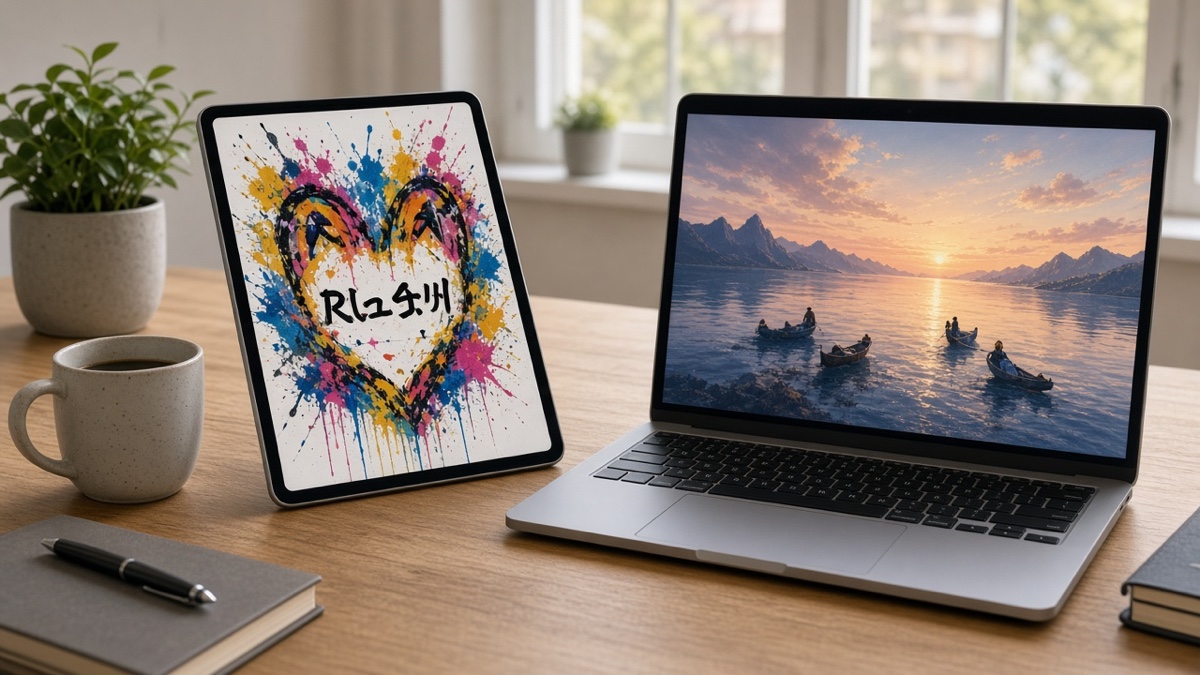
You exported the same graffiti tag from the Graffiti Generator and sent it to a friend. On your laptop the fill reads saturated and the outline stays sharp. On their phone the tag looks washed out and the speckles vanish into gray haze. Same filename. Two screens. That is what people mean when they say graffiti text different devices reports never match.
The mismatch rarely starts in the spray slider. It starts in what you actually delivered: a fixed PNG bitmap, a Unicode string, or a screenshot of the preview. Below is a diagnostic path in the order failures usually appear, from delivery type through scaling, live preview drift, upload compression, and export fixes before you touch font settings again.
Did you ship a PNG file or styled Unicode text?
Raster graffiti from a canvas export is a fixed grid of pixels. Unicode graffiti-style letters are plain characters mapped to Mathematical Alphanumeric Symbols, so each app chooses its own fallback font. A downloaded PNG from the Graffiti Generator always contains the same 800 by 600 bitmap no matter where you open it. Pasting 𝓣𝓐𝓖 into Discord does not, because Discord renders whatever font ships on that client.
That distinction matters when graffiti text different devices threads blame the wrong tool. If the problem follows the PNG file on every viewer, suspect scaling or compression. If only the pasted string breaks, you never had graffiti art. You had styled text that the platform re-shaped.
| Delivery type | What you get | Looks the same everywhere? | Typical failure |
|---|---|---|---|
| PNG from canvas export | Fixed 800x600 bitmap with embedded colors | Yes, until a platform re-encodes it | Upload compression, wrong zoom level |
| Unicode styled letters | Characters interpreted by local fonts | No | Fallback font, missing code points |
| Screenshot of preview | Arbitrary DPI depending on display | No | Retina scaling, cropped UI chrome |
The Unicode Consortium documents Mathematical Alphanumeric Symbols in the U+1D400 range. Those code points are not graffiti fonts. Read unicode text vs font generators when the mismatch is paste-shaped, not pixel-shaped.
How does display scaling hide true pixel size?
Device pixel ratio is the gap between CSS pixels and physical screen pixels. Your browser preview might show the canvas at 400 CSS pixels wide on a 2x Retina panel while the export stays 800 pixels wide. The file is full resolution. Your eyes are not viewing it 1:1.
Phones also apply system-wide display scaling. A PNG that looks huge in Files may shrink inside a messaging app thumbnail. Upscale that thumbnail again and edges soften. That is not the generator rewriting your art. It is resampling.
Always judge the downloaded PNG at 100% zoom on a desktop monitor before you decide the export failed. Preview size lies. Pixel dimensions do not.
When does vector preview still differ from the downloaded PNG?
Before export, live preview text is vector outlines rendered by the browser font engine. Windows ClearType, macOS Core Text, and Android's HarfBuzz stack hint strokes differently at sub-pixel sizes. Permanent Marker at 72px in Chrome on Windows can look slightly heavier than the same setting on Safari on macOS.
But once you click Download PNG, those differences freeze. Every device reads identical pixels from the file. If your friend still sees a thinner tag, they are almost certainly viewing a recompressed copy, not re-rendered type.
The eight preview fonts on this site (Permanent Marker, Rock Salt, Bungee Shade, Bangers, Rubik Spray Paint, Anton, Black Ops One, Creepster) all follow the same rule: preview is vector, export is raster. Do not screenshot the preview and call it the export.
Which upload step turns spray speckles into mush?
Social platforms re-encode uploads to save bandwidth. JPEG drops transparency and smears fine spray dots. Aggressive PNG quantizers flatten neon fills into banded gradients. A transparent tag that looked perfect in Preview can pick up a white fringe after a story upload because the pipeline flattened alpha onto a light background.
Large dimension uploads get downscaled too. An 800 pixel wide tag is already modest, but if you screenshot the preview at 2x Retina and upload a 1600 pixel crop with UI chrome, the platform may shrink it with a cheap filter. Outline pixels are the first casualties.
Clipboard paste adds another layer. Browsers may paste a downscaled bitmap while Download PNG keeps the full canvas. Chat apps often re-encode pasted images as JPEG, killing transparency. For Instagram-specific sizing, how to make graffiti art for Instagram posts walks the upload path this diagnostic assumes you already tried.
What export settings survive a second phone check?
Start by confirming you shared the downloaded PNG, not a screenshot of the preview and not Unicode from another tool. Re-export with a solid background if the destination flattens transparency. Thicken the outline one step if fine spray speckles disappear after upload. Pick Bangers or Permanent Marker for small display sizes instead of wide Rock Salt multi-line tags.
Test the exact path you care about. Export TAG in magenta with 40% spray, upload to one story frame, and open it on a second phone. If both match, your generator settings are fine. If only the uploaded copy fails, adjust for compression rather than font choice.
Same word, two pipelines: TAG as a PNG keeps pixel colors #FF2D8A on every disk copy. Pasted Unicode styling can revert to plain Latin letters. Ship the PNG when you need identical art on laptop and phone.
I've compared downloaded PNGs side by side on two phones before blaming the generator, and half the time the issue was a JPEG re-encode in the chat app, not the spray slider.
For the broader tool category split, what is a text generator explains why Unicode paste and PNG export are different products wearing similar marketing labels.
Frequently asked questions about graffiti text across devices
Why does graffiti text look blurry on my phone?
Phones upscale previews while social apps downscale uploads. An 800 by 600 export can look crisp in your camera roll and soft in a story sticker because the app resamples pixels. Check the file on a laptop at 100% zoom first.
How do I keep graffiti colors consistent across devices?
Export with a solid background when the app flattens transparency onto white or black. sRGB is the safe web default. Neon fills that pop on OLED can look dull on budget LCDs. Test one upload per platform if color is critical.
Why does pasted graffiti text look different from the downloaded PNG?
Clipboard paste and file download are not always the same bytes. Browsers may paste a downscaled bitmap while Download PNG keeps the full 800 by 600 canvas. Chat apps often re-encode pasted images as JPEG, killing transparency.
How do I check my PNG before uploading to Instagram?
Open the file at 100% zoom on desktop, then view it at story-frame width. Test transparent exports over a dark photo. If edges look crunchy at phone size, thicken the outline or lower spray before re-exporting.
Why do graffiti fonts look thinner on Windows?
Windows ClearType and macOS Core Text hint the same WOFF2 outlines differently in live preview. Canvas text is vector until export. The downloaded PNG is frozen raster art, so preview differences should not survive a file transfer.
How do I export graffiti text that survives Discord compression?
Use thicker outlines, fewer fine spray dots, and a solid background. Discord recompresses large images and strips alpha on some clients. Short words in Permanent Marker or Bangers survive better than wide Rock Salt tags.
What to read next if graffiti PNGs keep shifting on upload
- Unicode Text vs Font Generators
Pasteable Unicode versus PNG raster art when cross-device mismatch is really a category error.
- What is a Text Generator
Three generator types and which one produces fixed pixels versus live font rendering.
- How to Make Graffiti Art for Instagram Posts
Sizes, composites, and upload paths that survive Instagram compression.
About the author
Written by Alex Morgan, a front-end engineer specializing in Unicode text tools since 2019. Last updated: .
About Graffiti Generator