unicode · guides · graffiti
Unicode Text vs Font Generators
Unicode text vs font generators: pasteable code points, PNG graffiti exports, and installable fonts solve different jobs. See which survives bios and image slots.
Published · 1 min read
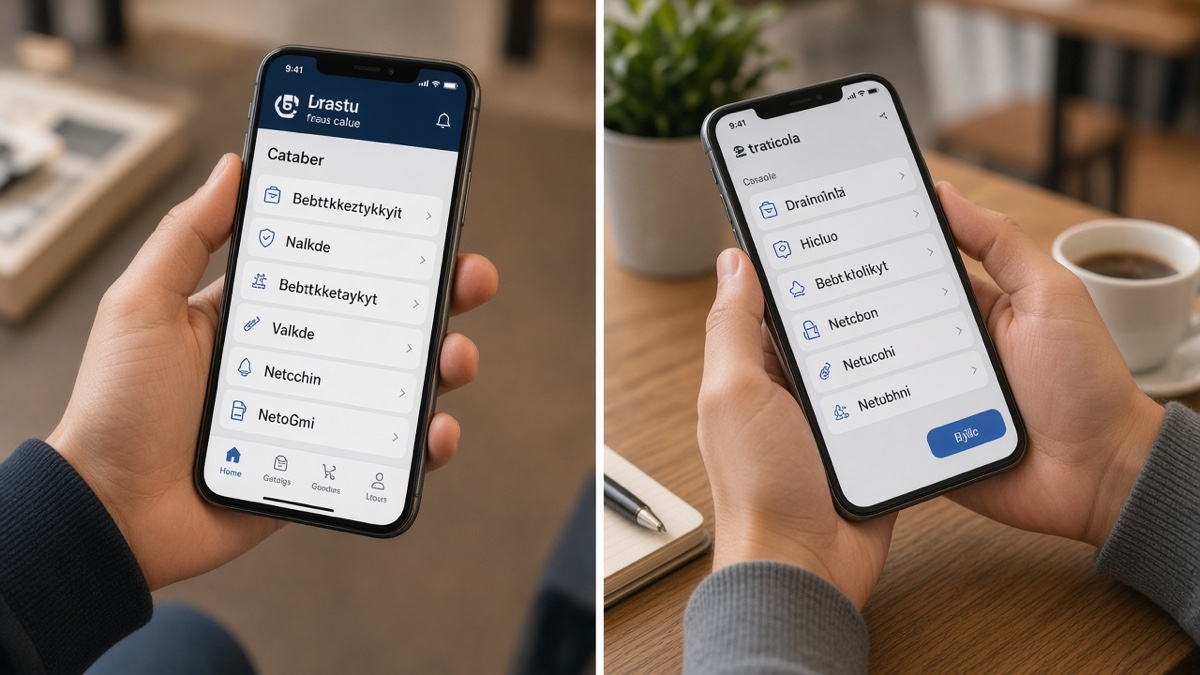
You searched unicode text vs font generators because both categories promise styled lettering, yet they ship completely different files. A Unicode tool turns hello into 𝒽ℯ𝓁𝓁ℴ, five distinct code points from Mathematical Alphanumeric Symbols and Letterlike Symbols that you paste into a bio field. A graffiti font generator turns the same word into an 800 by 600 PNG with spray speckles baked in. An installable graffiti font gives you live characters in Canva, but only on your machine. Same aesthetic goal. Three output contracts. Pick wrong and you either get Arial in Discord or a blurry image where text was required.
That confusion costs real time. Someone exports a PNG, tries to paste it into an Instagram bio, and gets nothing. Someone else runs a fancy Unicode row, drops the result into a shirt mockup at print size, and wonders why the strokes look thin. Below you'll see how each path works at the byte level, which platforms accept which deliverable, and where graffiti-style PNG tools still beat pasteable Unicode.
What counts as Unicode text in a generator?
Unicode text generators map each ASCII letter you type to a pre-defined code point in the Unicode standard, usually inside Mathematical Alphanumeric Symbols (U+1D400 through U+1D7FF) or related blocks. The output is still plain text. You copy a string. The bytes travel through bios, chat boxes, and usernames as UTF-8. No font file installs on the reader's phone. What changes is which glyph the OS draws for each scalar value.
The Fancy Text Generator is the fastest way to preview sixteen rows against your actual phrase. Type once, compare script, fraktur, fullwidth, and circled output, then copy the single line that matches your destination before you hunt for a second site.
Concrete example: STYLE in script becomes 𝒮𝒯𝒴ℒℰ, with capitals S, T, Y, and L pulled from Letterlike Symbols at U+1D4AE, U+1D4B5, U+1D4B8, and U+1D4B7 while E maps to U+2130. Same word in fraktur becomes 𝔖𝔗𝔜𝔏𝔈 with its own hole-letter map. Neither string is a font download. Both are paste buffers.
Not the same thing. Wrong expectation, wrong tool.
How does pasteable output differ from PNG exports?
Font generators in the graffiti and display-type sense render letters with real typeface files (WOFF2 on this site) onto a canvas or inside a design app. The deliverable is either a raster image (PNG with alpha) or locally styled live text. Custom fonts do not embed inside a Discord message or Instagram caption. Images do not paste into a bio text field. Neither category is Unicode unless the tool explicitly says it maps code points.
The Graffiti Generator loads eight open-source faces (Permanent Marker, Rock Salt, Bungee Shade, Bangers, Rubik Spray Paint, Anton, Black Ops One, and Creepster), applies fill, outline, and procedural spray on an 800 by 600 canvas, then exports PNG. You keep pixels, not a string. I've exported hundreds of these PNGs for sticker mockups, and the file that survives Instagram compression keeps a thick outline and flat fill.
Installable TTF or OTF files sit between the two worlds. You get editable vectors or live text in Illustrator, but recipients of a Discord ping never see your local Bangers install. For a deeper read on why PNG drift happens on phones, see why graffiti text looks different across devices.
Where does each deliverable land on social apps?
Unicode text wins anywhere the platform stores characters and forbids custom fonts or image embeds. Graffiti PNGs win when the destination accepts uploads and you want spray texture baked in. Installable fonts win only inside apps where you control the type menu.
| Factor | Unicode text generator | Graffiti PNG generator | Installable display font |
|---|---|---|---|
| Output type | UTF-8 string of code points | Single raster image, often PNG with alpha | Typeface file applied to live text |
| Paste into Instagram bio | Yes, as characters | No. Bios reject images in the text field | No. Bios ignore your local font install |
| Paste into Discord chat | Yes, as characters | No. Upload images separately | No. Chat uses platform fonts |
| Editable after export | Yes. Retype or delete in any text field | No. Change spelling means re-export | Yes inside apps with a font menu |
| Real spray texture and outline | No. Glyphs follow math font shapes | Yes. Effects baked into the export | Only if you add stroke and texture in the app |
| Depends on reader font coverage | Yes. Missing glyphs show boxes or Latin fallback | No. Pixels look the same everywhere | N/A for chat; yes for documents you share as PDF |
| Typical code point example | Script capital A at U+1D49C | N/A (pixels, not code points) | N/A (font software, not Unicode map) |
| Best for | Bios, usernames, tweets, plain-text chat | Story stickers at 1080 by 1920, banners at 960 by 540 | Posters, logos, merch you will revise |
| License layer | Unicode is a standard; generator site terms vary | Font license plus generator terms | Apache 2.0, SIL OFL, or commercial per face |
The table is the fast answer. Unicode is for paste fields. PNG generators are for image slots. Installable fonts are for design apps where you own the layout.
Username signup on many games still whitelists [A-Za-z0-9._] and rejects Mathematical Alphanumeric Symbols before display. That is a validation failure, not a font failure. A PNG does not help there either because the field expects text, not an upload. Only plain ASCII or a platform-approved character subset survives account creation.
When should you pick fancy Unicode over a graffiti PNG?
Unicode wins when the destination is a text field and the phrase might get edited later. Discord nicknames, Instagram bios, and tweet text accept pasted strings. You fix a typo in place. A PNG forces a round trip through the generator.
One script letter is one code unit on most JavaScript-based counters, same as ASCII. Unicode carries style without a design app. The tradeoff is aesthetic ceiling: you get math-font shapes, not hand-painted drip and speckle. Italic Unicode at U+1D434 through U+1D467 usually shows the fewest hole-letter surprises on iOS. Preview on your own device before you publish.
Fullwidth rows from the vaporwave text explainer widen every ASCII letter by the U+FEE0 offset. That is still Unicode paste, not a PNG, and it fails search indexes the same way fraktur does because the byte sequence no longer matches plain Latin.
When does an installable font beat both paths?
A graffiti PNG beats Unicode when the look needs texture the standard does not encode. Outline width, drop shadow, and procedural spray are pixels, not code points. Fixed canvas size is the PNG caveat. Eight hundred pixels wide is enough for phone screens, not for a full back print at 300 DPI without rebuilding in vector. The t-shirt print guide walks through when to upscale or trace.
Installable fonts beat Unicode when you will scale type across merch and client revisions. Convert to outlines in Illustrator for screen print. Unicode letters do not export as vector paths from a paste buffer.
For Discord status lines and Instagram display names people say aloud, Unicode italic beats a busy PNG. For a single word on a story slide, a PNG with high contrast fill beats thin math-font strokes. Screen readers may announce these code points as symbols, not words. Use Unicode styling for display flair only.
Installable fonts from the free graffiti fonts roundup beat paste when you need real kerning in a print file. Unicode beats installable fonts when the destination is someone else's chat box and you cannot control their type menu. The three-way split is not about quality. It is about who holds the rendering pipeline.
Bubble circled letters from the Bubble Text Generator are still Unicode paste, not PNG. They pull from Enclosed Alphanumerics (U+24B6 through U+24E9 for capitals) and survive some bio editors that reject fraktur hole capitals. They still fail username signup whitelists the same way script does. Match the row to the field type, not to the mood board alone.
Which questions come up about Unicode text and font generators?
Can you paste graffiti font output into an Instagram bio?
No. Instagram bios accept plain text characters, not images and not custom installed fonts. A graffiti font only changes how letters look inside apps where you control typography locally. A graffiti generator exports a PNG image, which also cannot live inside the bio text field. For pasteable styled bios, use a Unicode text generator that maps letters to Mathematical Alphanumeric Symbols code points.
Does Unicode styled text work in Discord chat?
Yes, when Discord keeps the UTF-8 code points intact. Chat messages store plain text, so script at U+1D49C through U+1D4DF or fraktur at U+1D504 through U+1D537 paste like normal characters. The risk is missing glyphs on the reader's device, not Discord stripping the bytes. Zalgo combining marks can hit message limits faster, but standard cursive Unicode usually sends fine.
Is a font generator the same as a Unicode text generator?
No. A Unicode text generator outputs a string of code points you copy into text fields. A font generator in the graffiti sense draws letters with webfonts on a canvas and exports a raster PNG. A third category, installable font files, gives you live editable type in Photoshop or Canva but does not travel through paste. Three different deliverables.
Which counts more characters on a 150-character Instagram bio?
Each Mathematical Alphanumeric letter is typically one UTF-16 code unit on platforms that measure bios with JavaScript string length, same as plain ASCII per letter. Emoji and some symbols count as two. A PNG from a graffiti generator does not count toward the bio limit because it is not text at all. You would upload it as a profile image or story asset instead.
Why does Unicode text sometimes show as boxes or plain Latin?
The receiving app asked the OS font for a glyph at that code point and got nothing useful. Script capital H at U+210B lives in Letterlike Symbols, not the main script block, so phones with thin math font subsets render a fallback H next to looped lowercase letters. That is a font coverage gap, not proof the generator failed.
When should you use a graffiti PNG instead of Unicode text?
Use a PNG when the destination accepts images, the phrase is final, and you want real spray texture, outline width, and color baked in. Story stickers, server banners, and thumbnail overlays fit. Use Unicode when you need editable plain text in a bio, username, or chat message. Use an installable font when you will resize or reword inside a design app.
What to read next when picking a text styling tool
- What Is Vaporwave Text
Fullwidth spacing and halfwidth katakana for retro bios without images.
- How to Print Graffiti on a T-Shirt
When a PNG export needs print resolution instead of pasteable Unicode.
- Why Does Graffiti Text Look Different Across Devices
Font fallback and WOFF2 loading explain PNG and Unicode drift on phones.
About the author
Written by Alex Morgan, a front-end engineer specializing in Unicode text tools since 2019. Last updated: .
About Graffiti Generator